

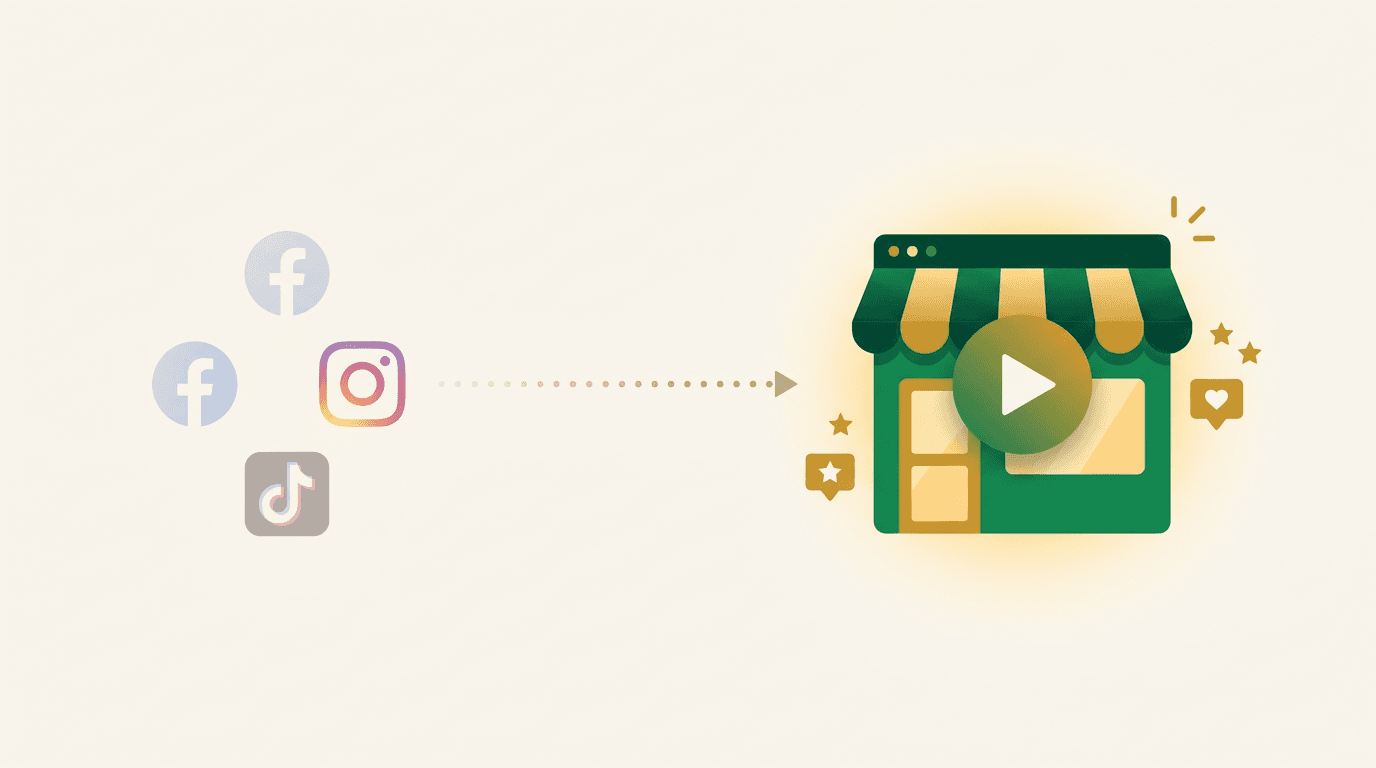
Stop Building on Borrowed Ground: Why Shopify Stores Need to Own Their Brand Story in 2026
Facebook organic reach is under 2%. Meta is demoting non-original content. Here's why your Shopify store should tell your brand story.
Last week, Meta had the worst week in its history — $375 million in fines, a test-case verdict tied to 2,000 pending lawsuits, an FTC antitrust appeal, and its stock hitting the bottom of the Magnificent Seven. If you run a Shopify store, those headlines should have been a wake-up call.
But here's the thing: the court cases are the dramatic part. The structural problem runs much deeper. Even without a single lawsuit, Meta's platforms have been quietly, systematically becoming a worse place for e-commerce brands to build their presence. The algorithm changes, the reach collapse, the new content rules — they all point in one direction.
It's time to stop renting your brand story on someone else's platform and start owning it on your own site.
The Algorithm Quietly Turned Against You
The decline didn't happen overnight. It's been a slow erosion over more than a decade, and the data is now impossible to ignore.
Organic Reach Has Collapsed
In 2012, a Facebook business page could expect about 16% of its followers to see any given post. By 2025, that number had fallen to between 1% and 2%, according to Hootsuite. Socialinsider's 2025 study pegged Facebook's average reach rate at just 1.65%. And Sprout Social reports Facebook's average engagement rate is now 0.15% — the lowest among major social platforms.
Think about what that means in practice: if your Facebook page has 10,000 followers, roughly 165 of them will see your post. And only about 15 will engage with it. That's the reality of "free" organic marketing in 2026.
Meta Is Formally Demoting Non-Original Content
On March 16, 2026, Meta published "Rewarding Original Creators on Facebook" on its official newsroom — a formal policy update, not just an algorithm tweak. The new rules are blunt: content that's reposted, minimally edited, or not substantially original will be deprioritized across Feed and Reels. Repeat offenders face three escalating penalties:
- Reduced distribution — not just for the offending post, but for everything the account publishes
- Loss of monetization eligibility — locked out of Meta's Content Monetization Program
- Non-recommendable status — the algorithm will never surface the account to new audiences
For small businesses that maintained their Facebook presence by resharing industry content, curating posts, or reposting their own TikToks with minor edits, this is a direct hit. The content strategy that "worked well enough" six months ago now actively hurts your reach.
Your Followers' Feeds Are Full of Strangers
Mark Zuckerberg confirmed on Meta's Q4 2025 earnings call that approximately 30% of posts in Facebook users' feeds now come from AI-powered recommendations — content from accounts they don't follow. Industry analyses from PostEverywhere and Addictive Digital put the figure as high as 50%. And Zuckerberg told investors he plans to add "yet another huge corpus" of AI-generated content into the recommendation system.
Your followers' feeds are increasingly filled with content from people and brands they never chose to follow. Your posts aren't competing with your competitors — they're competing with the entire internet, curated by an AI that doesn't care about your business.
Engagement Bait Is Penalized
The algorithm now actively punishes the tactics many small businesses relied on. According to Blackbird Digital, posts containing phrases like "comment below," "share your thoughts," or "like if you agree" now reach 76% fewer followers than identical content without those prompts. The system rewards depth — long comments, saves, shares to friends via Messenger — while penalizing anything that looks like a shortcut.
Meta Is Testing Pay-to-Link
Perhaps the most telling signal: RBB Communications reports that Meta recently began testing limits on how many organic links certain business pages can share on Facebook — unless they pay for Meta Verified. The same report notes that between 2018 and 2025, Facebook referrals as a percentage of web traffic to publisher websites dropped more than 75%.
Meta isn't hiding its intent. The platform wants to keep users scrolling inside its ecosystem, not clicking through to your Shopify store. Every external link is a "leak" in their ad-revenue machine.
The Hidden Cost of Building on Rented Land
The algorithm data is damning, but the deeper problem is structural: you don't own anything you build on someone else's platform.
- Your followers aren't yours. Meta controls who sees your content, when, and how. You can't export your Facebook followers to an email list. You can't take them with you if the platform changes its rules — or if your account gets restricted.
- Algorithm changes can zero out your reach overnight. On Reddit's r/ecommerce, one store owner shared how their business went from $9,500/month in revenue to $0 after Meta ads stopped performing. The business had been "100% dependent on outbound ads, almost no inbound." No owned audience, no fallback.
- Platform redesigns can make your strategy obsolete. Meta unified all Facebook video into Reels in mid-2025. Before that, the 2018 "meaningful interactions" pivot crushed publisher reach. Before that, the 2016 "pivot to video" — built on inflated video metrics — led publishers to gut their editorial teams, only for Facebook to change course again. The pattern repeats.
This isn't unique to Meta. TikTok faces its own regulatory threats. X (formerly Twitter) has seen massive advertiser exodus. Every social platform is rented land. But Meta is where most Shopify merchants have invested the most — and it's where the risks are most acute right now.
Own Your Story — On Your Own Site
Your Shopify store is the one channel you fully control. No algorithm sits between you and your customer. No policy change can erase your content overnight. And the data shows that on-site video storytelling doesn't just match social media — it outperforms it for conversions.
Video on Your Site Converts Better Than Video in the Feed
Paid social traffic converts at just 0.8–1.2% on Shopify — below the platform average of 1.4–1.8%. Meanwhile, 87% of customers say video influenced their buying decision, and 64% are more likely to purchase after watching a product video on-site. The difference is context: a customer watching your brand story video on your product page is already in buying mode. A customer scrolling past your Reel in a feed full of memes and AI slop is not.
Tell the Stories Only You Can Tell
Meta's own March 2026 content policy inadvertently makes the case for owned storytelling. The platform now rewards content that "only you can produce" — your team, your product in use, your customers, your process. But instead of producing that content for Meta's algorithm, produce it for your own store:
- Founder stories on your About page — why you started, what you believe in, what makes your approach different
- Behind-the-scenes videos on product pages — how your product is made, sourced, or tested
- Customer testimonials in video format — real people sharing real experiences, embedded where the buying decision happens
- Product-in-action demos that show your product solving real problems, not just sitting on a white background
This is emotional video storytelling put to work in the place that matters most — the point of purchase.
Social Proof Belongs on Your Store, Not Just the Feed
Think about the last time a customer posted a glowing TikTok review of your product. It got views, maybe went semi-viral, and then disappeared into the algorithmic ether. A week later, it's buried. No one visiting your store will ever see it.
Now imagine that same video living permanently on your product page, playing for every visitor who lands there. That's the difference between social proof that evaporates and social proof that sells.
UGC on Your Site Works Harder
User-generated content — customer videos, unboxing clips, real-life product reviews — is the most trusted form of marketing. But when it lives only on TikTok or Instagram, its lifespan is measured in hours. When you repurpose that content onto your Shopify store, it works for you 24/7, converting visitors who are already in a buying mindset.
Shoppable Video Turns Proof into Revenue
Static text reviews are good. Video testimonials are better. Shoppable video testimonials — where a customer can tap the product while watching the review and add it to cart — are the best of all. It collapses the distance between "I trust this" and "I bought this" into a single interaction.
How to Make the Shift
You don't need to abandon social media or start from zero. You need to stop treating social platforms as your home and start treating them as distribution channels for your owned content. Here's how:
Step 1: Audit Your Best Social Content
Look at your top-performing TikToks, Instagram Reels, and Facebook videos from the past 6 months. Which ones drove the most engagement? Which ones actually led to store visits? Those are your candidates for on-site placement.
Step 2: Repurpose as On-Site Shoppable Experiences
Take those top performers and embed them on the pages where they'll have the most impact — product pages, collection pages, and your homepage. Tag the relevant products so viewers can shop directly from the video.
Step 3: Add Multiple Video Formats
Different placements serve different purposes:
- Stories on product pages — full-screen vertical testimonials and demos right where the buying decision happens
- Carousels on your homepage — a scrollable feed of your best video content that greets every visitor
- Floating reels on collection pages — a persistent, non-intrusive video player that reduces bounce and increases time on site
Step 4: Track On-Site Metrics, Not Vanity Metrics
Stop measuring success by likes and follower counts. Start measuring what matters: video play rate on product pages, click-through from video to add-to-cart, conversion rate for visitors who watched a video versus those who didn't. These are the numbers that connect directly to revenue.
Tools like ReelTok make this entire workflow straightforward — import your social videos, place them anywhere on your store as Stories, Carousels, or Floating Reels, tag products, and track performance. Setup takes five minutes with no code required.
The Bottom Line
Meta's legal troubles and algorithm changes are not temporary hiccups. They're the latest chapters in a decade-long trend: social platforms are optimizing for their own revenue, not for your brand's growth. Organic reach will keep shrinking. The rules will keep changing. And every hour you spend creating content exclusively for someone else's platform is an hour that builds their business, not yours.
Your Shopify store is the one place where you set the rules. Where your brand story lives permanently. Where customer testimonials work for you around the clock. Where a video view can become a sale without competing against an algorithm.
Stop building on borrowed ground. Bring your brand story home.
Related articles
More from UGC & Social Proof

The AI Creator Economy Is Booming: What It Means for Your UGC Strategy
UGC creator collaborations are up 93% year over year, and most brands now use AI somewhere in the pipeline. Here's how to use both without losing trust.
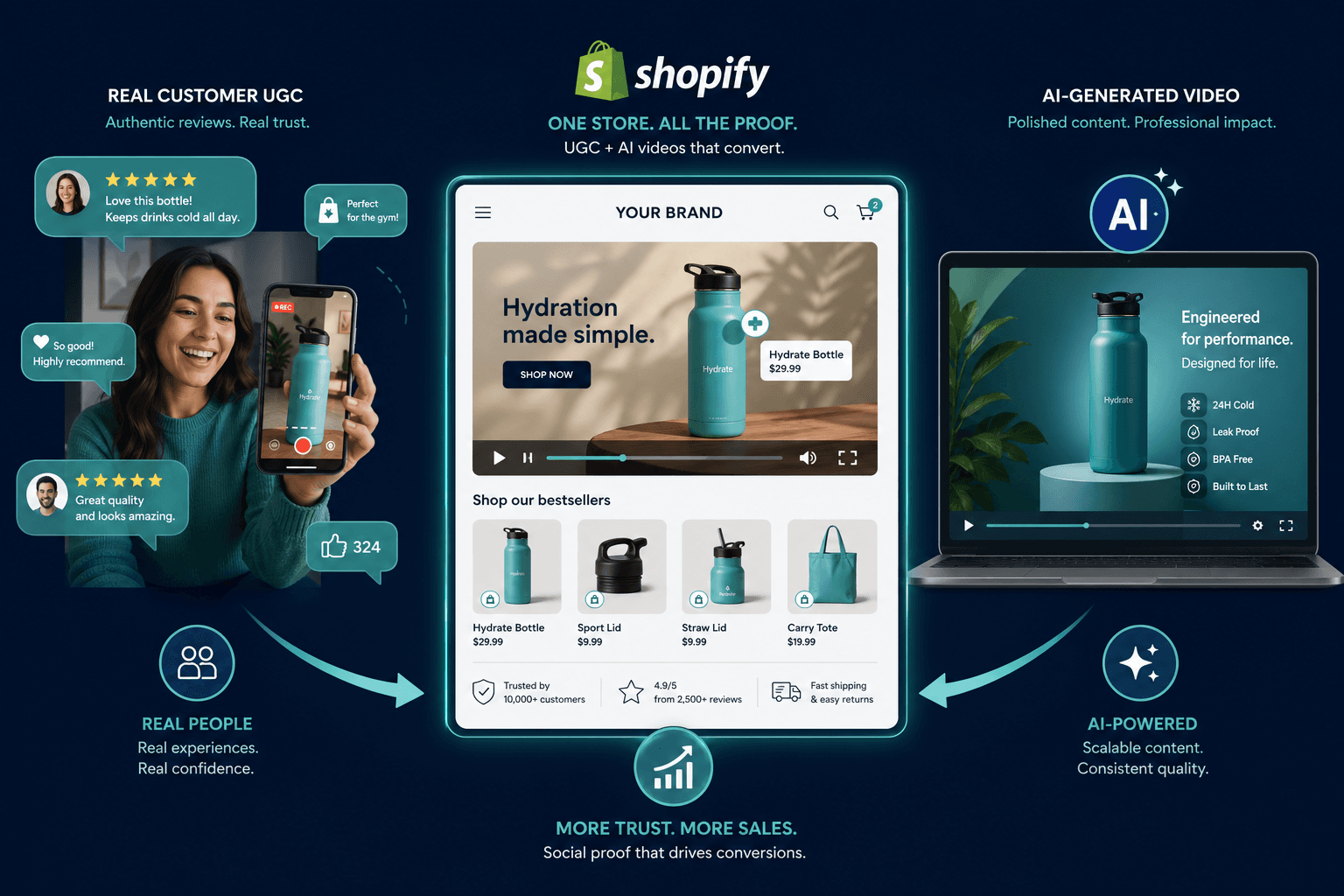
Stop Choosing Between AI and UGC. Your Store Needs Both.
UGC drives 6.7x higher conversions. AI fills your content gaps in 60 seconds. Here's how to run both on your Shopify store.
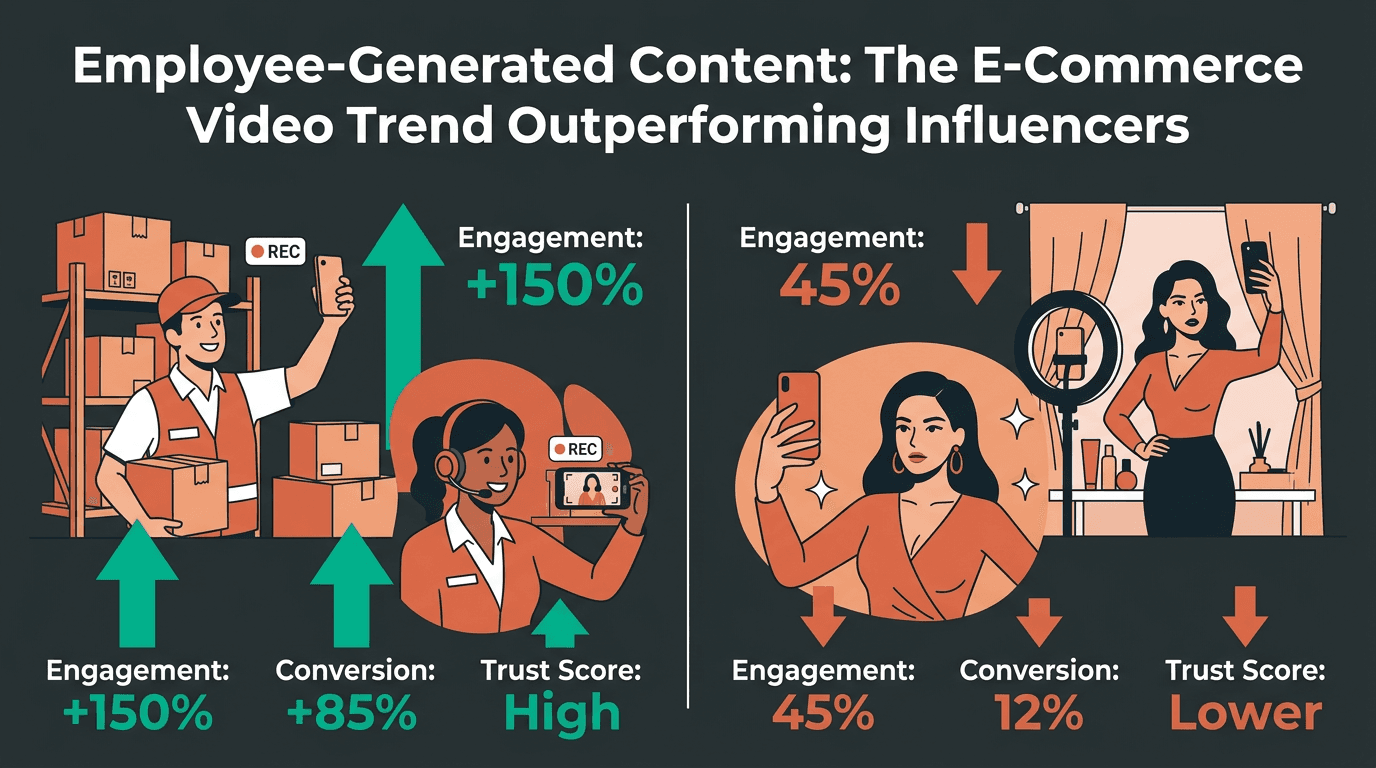
Employee-Generated Content: The E-Commerce Video Trend Outperforming Influencers
EGC videos hit a 20% conversion rate — 9x the industry average. Here's why employees are your store's best content weapon.